
Yeast libraries
We are lucky to house a variety of genome wide tools to facilitate genetic dissection of different cellular processes. This includes:
• Mat A and Mat Alpha deletion collections
• DAmP depletion of essential gene collection (a kind gift from Maya Schuldiner)
• Yeast Estradiol Titratable Induction (YETI) library (a kind gift from Scott McIsaac)
• N-terminally tagged GFP library (a kind gift from Maya Schuldiner)
Using these tools, we have performed some screens to identify novel and conserved machinery that regulates membrane trafficking pathways.
Endosomal recycling screen
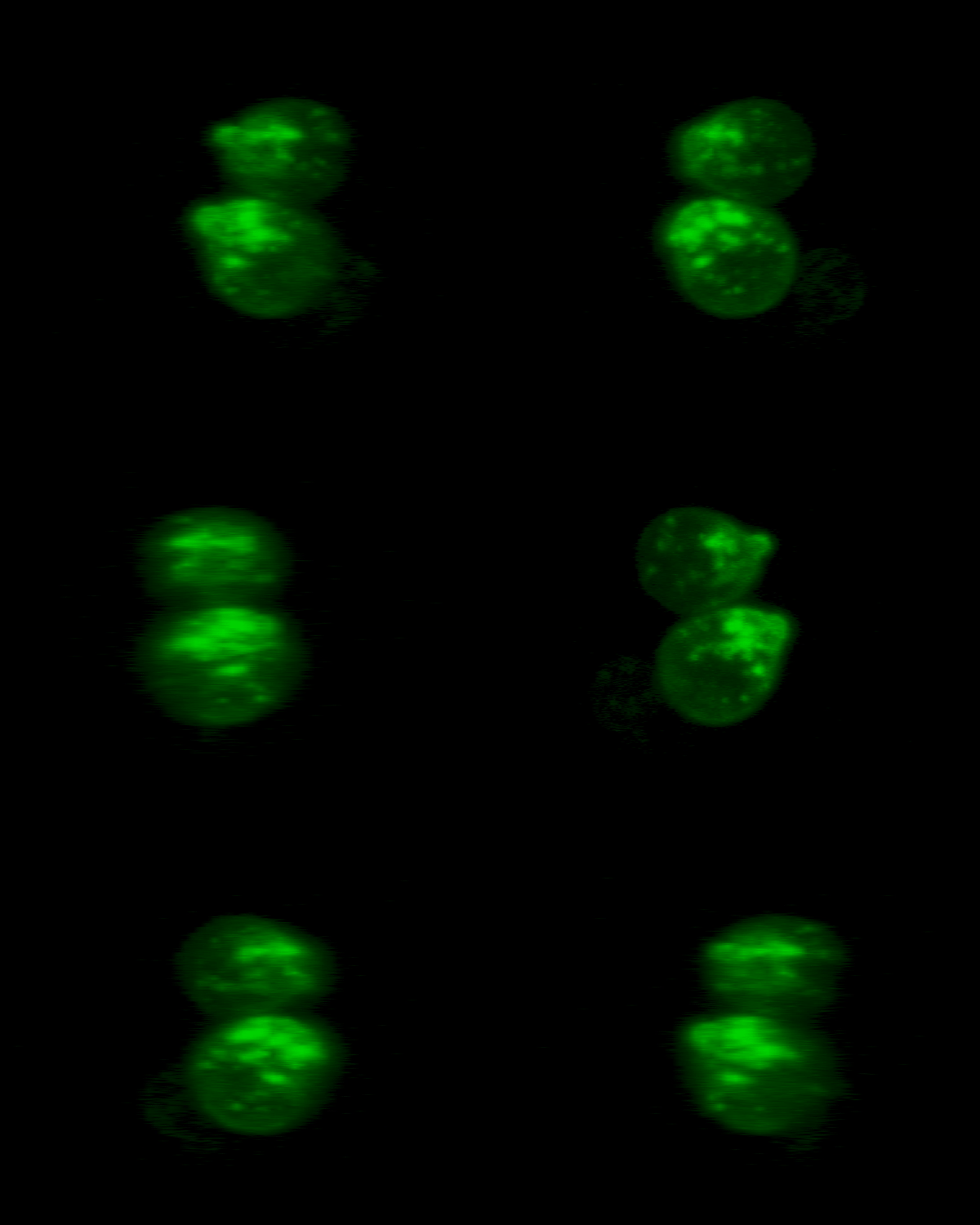
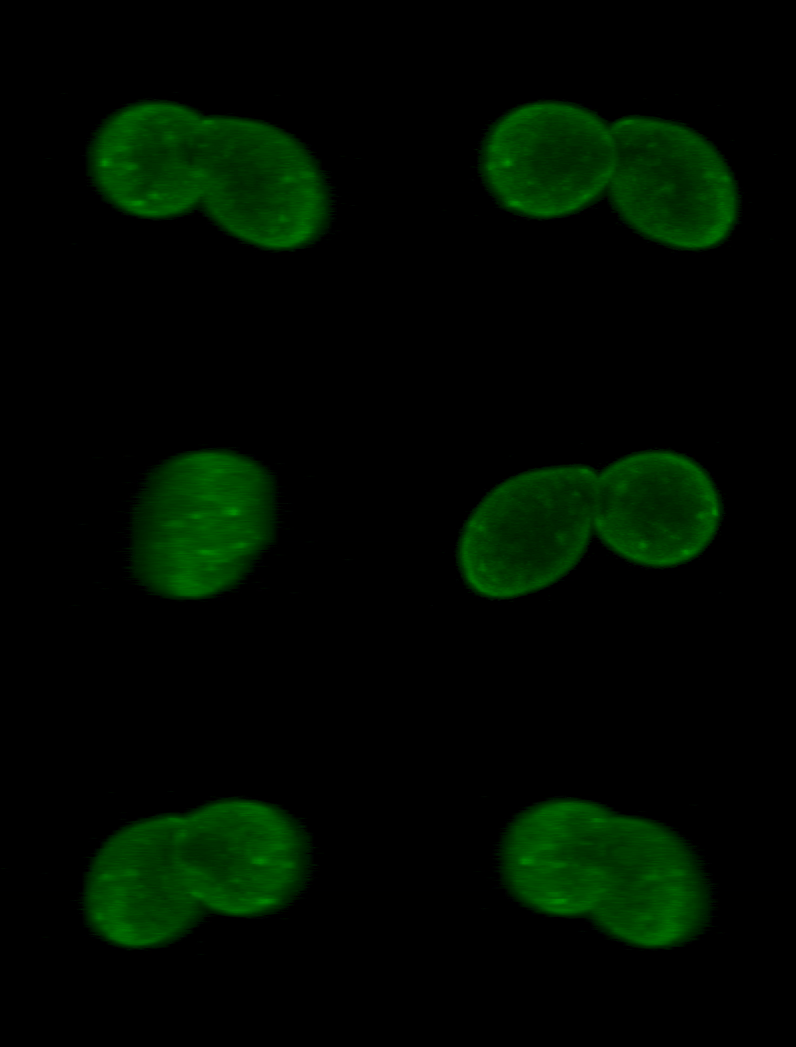
Using an engineered fluorescent reporter that efficiently recycles to the surface in wild-type cells (left) but gets trapped in endosomes (right), a microscopy based localisation screen was performed to identify recycling defective mutants.
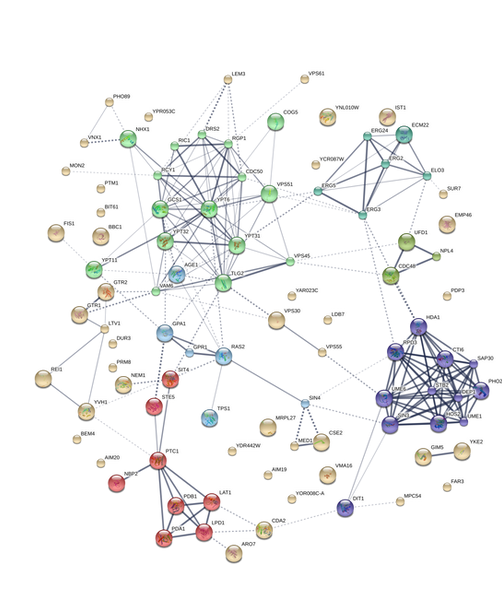
Following cross-referencing - validation using complementary techniques - we identified 89 endosomal recycling factors.
Surface transporter screen
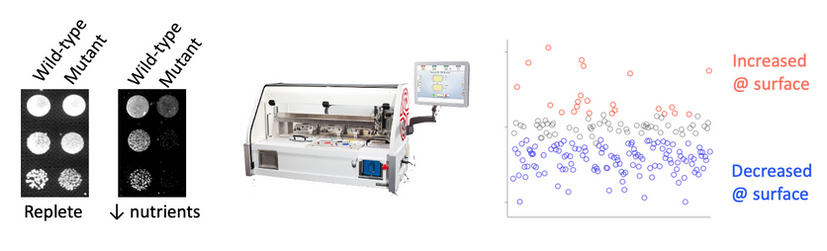
In a previous study, we discovered that the surface activity of a surface transporter correlates with growth in nutrient limited conditions. Taking advantage of this observation, we used a robotic system to perform growth assays of mutants in 1536 format (left) to reveal a large number of mutants that increase/decrease surface transporter levels (right).
Read more: Paine et al. Traffic 2021.
Enzymatic screens
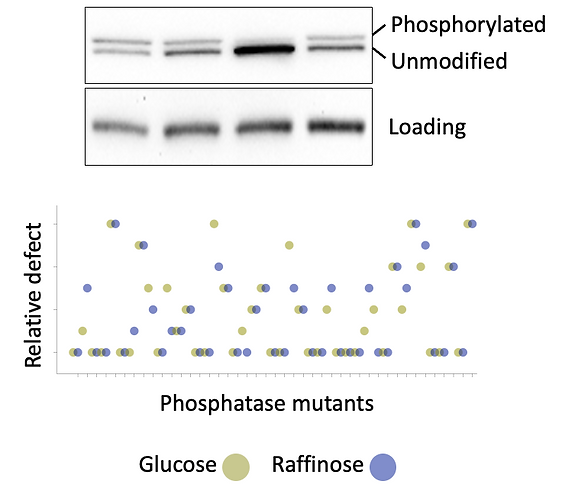
Some cellular processes we study are regulated at the post-translational level. We have assembled libraries of deletion, depletion and enzyme-reversal tools to study enzymatic regulation of these processes. For example, after discovering a stress induced dephosphorylation event regulates starvation responses, we identified the responsible enzyme.
Precision genetics & transcriptomics
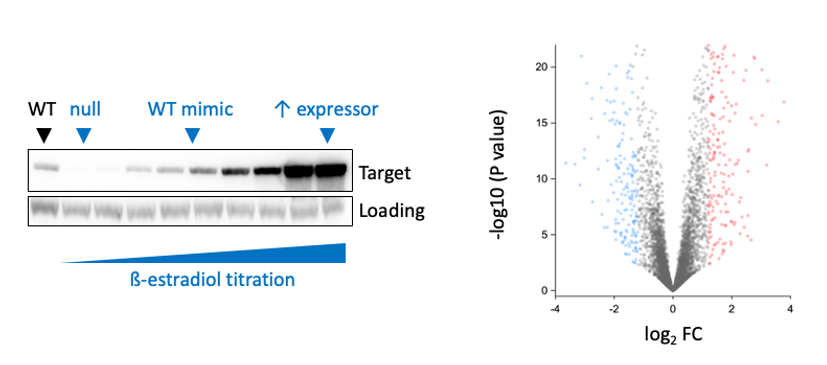
We use titratable yeast genetics - such as the YETI library developed by Scott McIsaac and colleagues -
to identify wild-type levels / phenotypes of genes we are studying. This means we can then acutely deplete or over-express genes, without worrying about secondary / compensatory mutations (left). This approach can be coupled with RNAseq to reveal transcriptional levels of regulation of the pathways we study (right).